
Active Honey Test
Active Honey Test
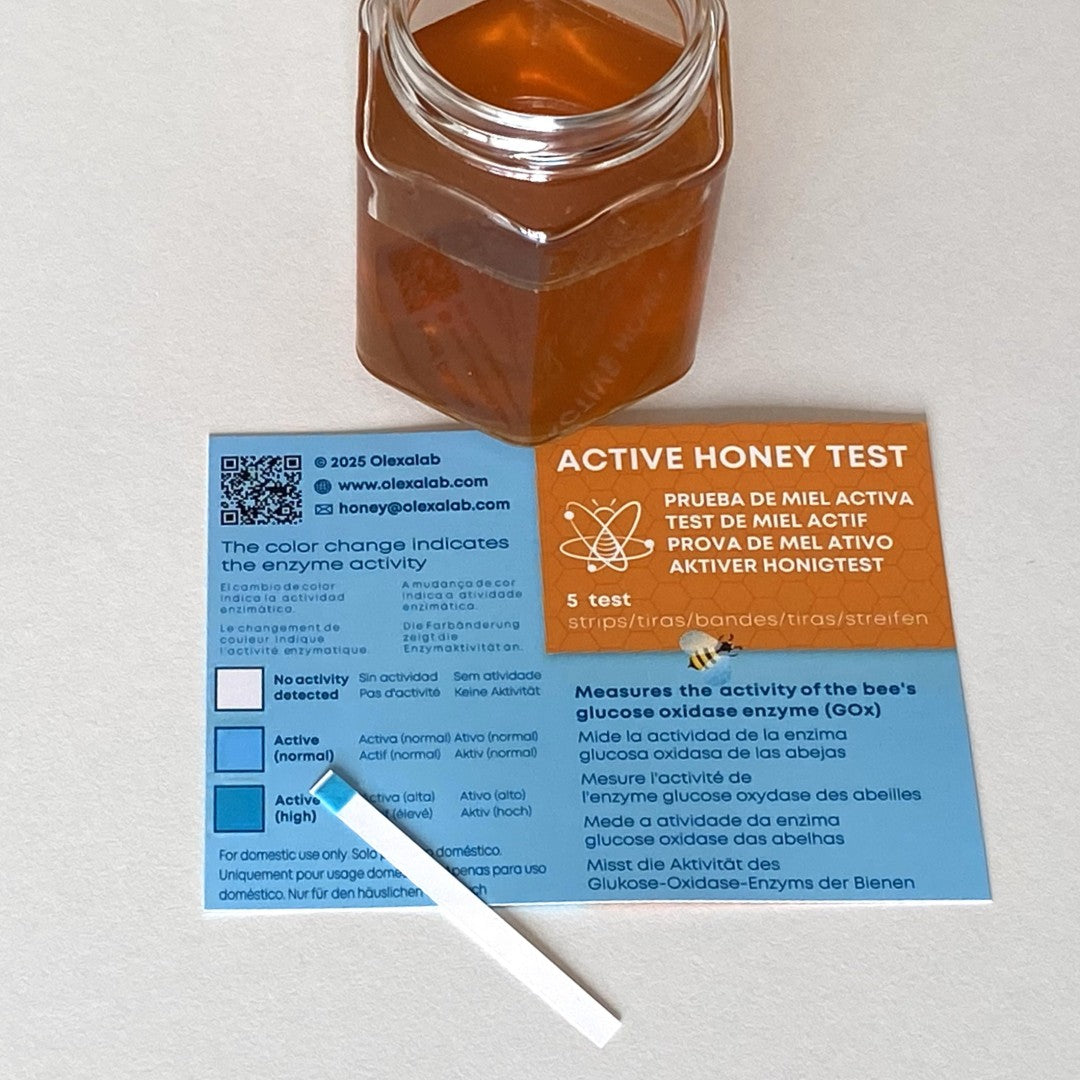
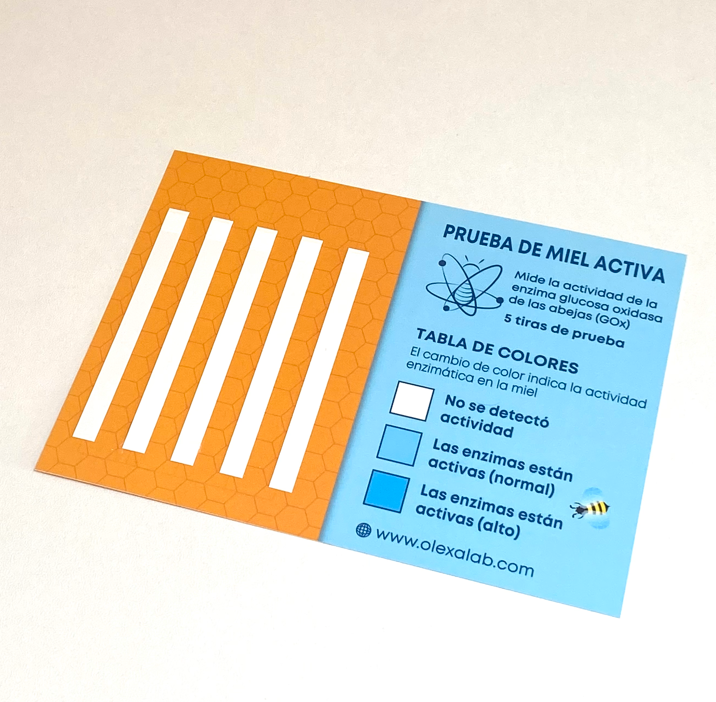
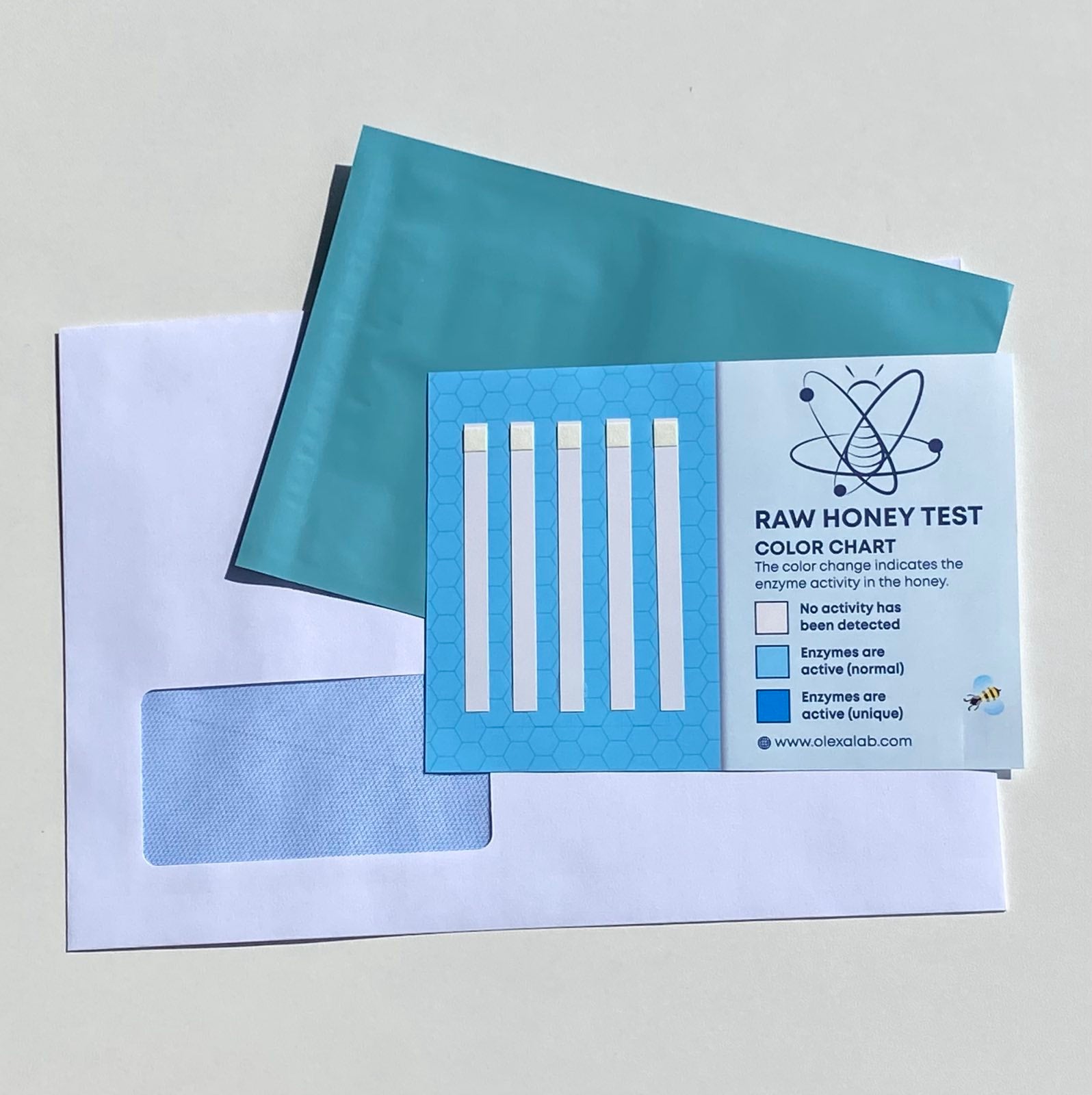
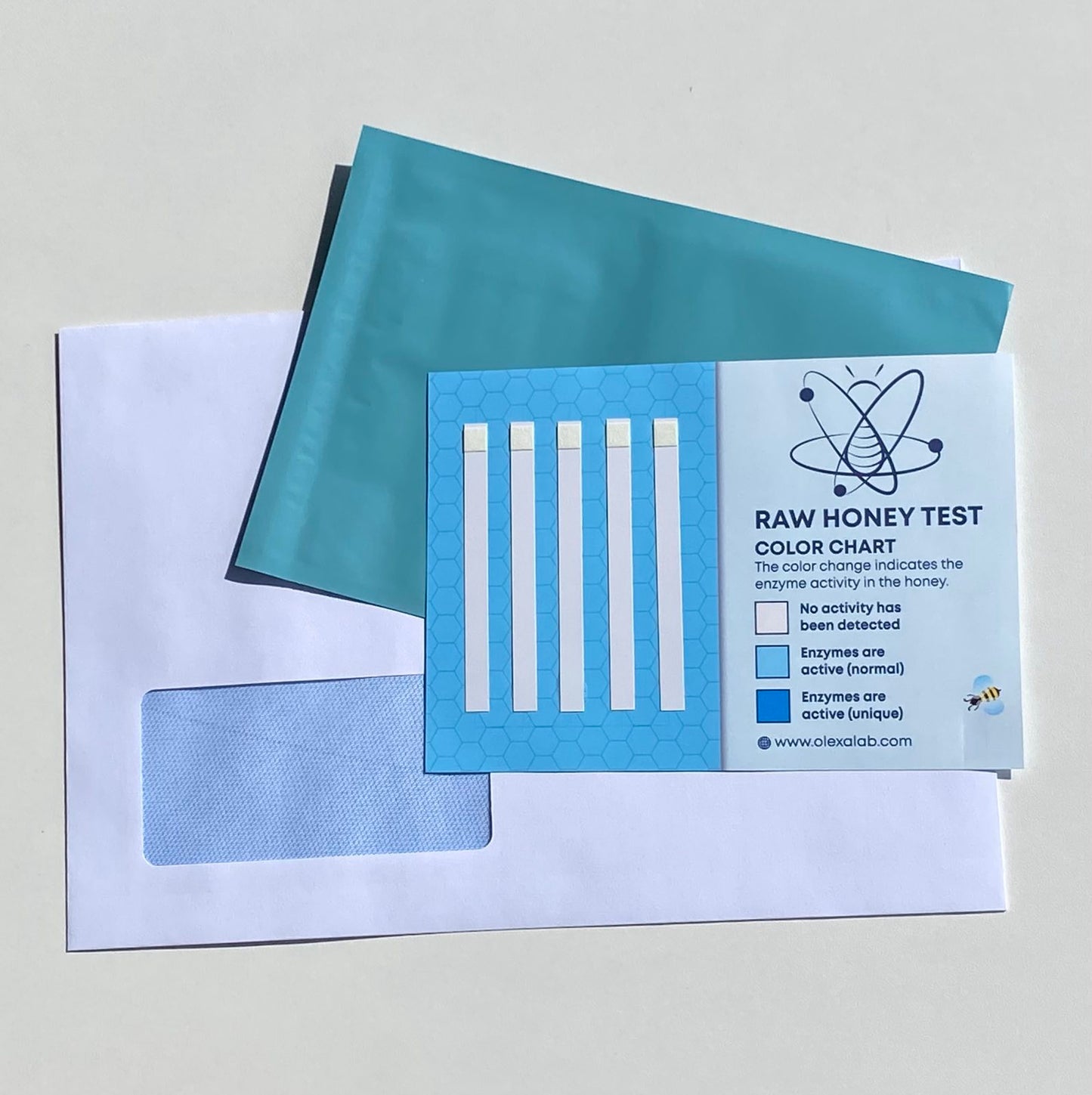
Testing kit with 5 test strips for personal use at home.
Honey can be labeled RAW. Don’t judge by words. Test it!
Honey can be fake or counterfeit. But even natural honey can lose its health properties after processing.
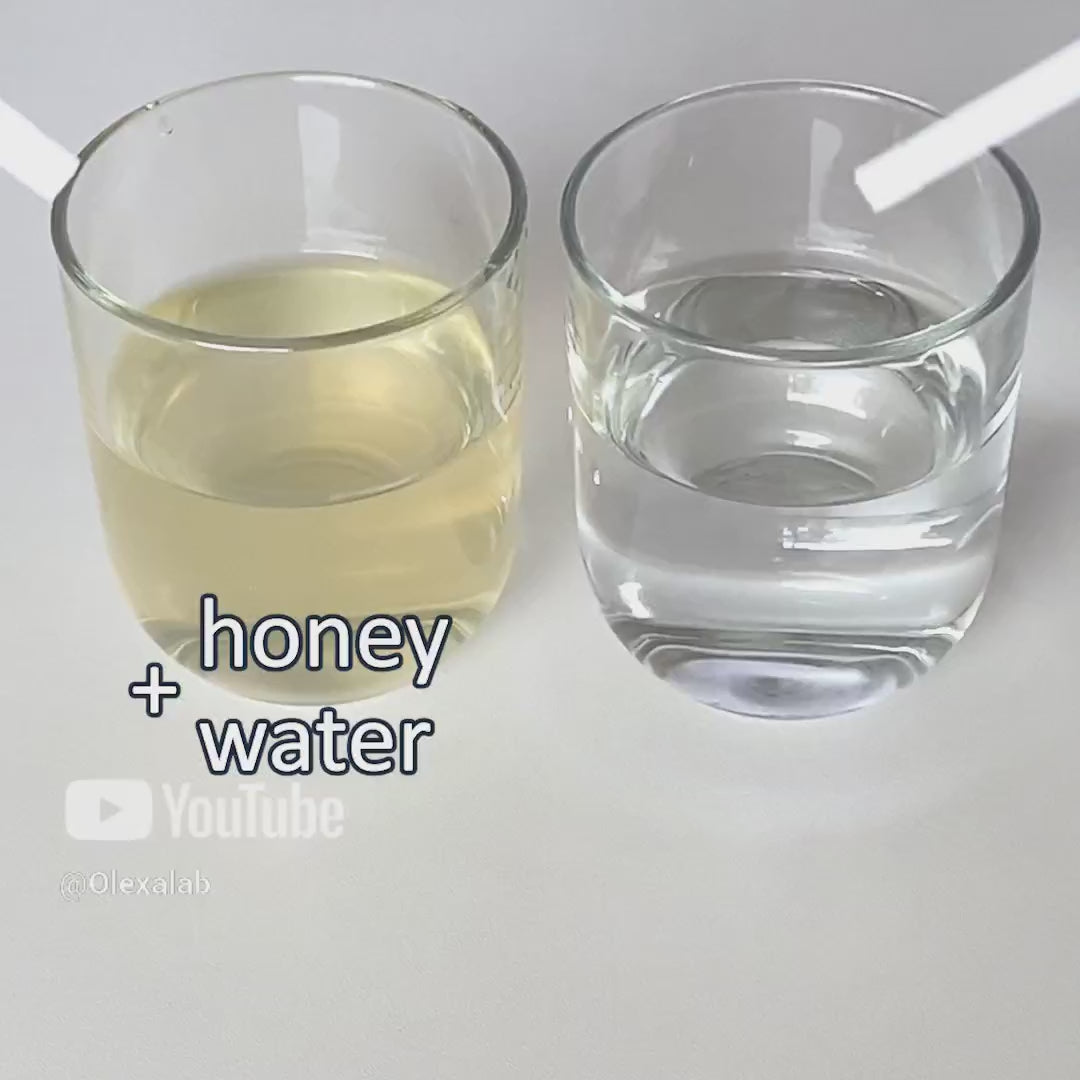
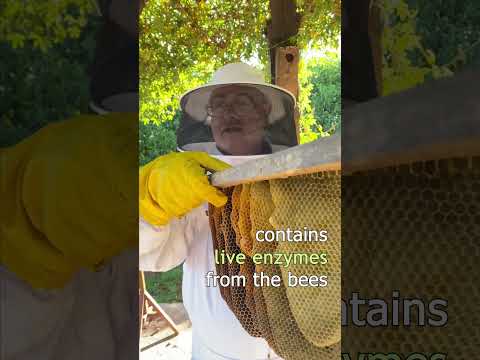
When honey is mixed with water, natural bee enzymes become active and start producing hydrogen peroxide, a key antibacterial factor in honey.
A negative test result will appear in all cases where that activity is absent: fake or counterfeit honey, and real honey that has lost its properties during processing, heating, or storage.
Each kit includes 5 test strips, so you can compare different honey samples and choose raw honey with confidence.
Instructions. The test ships Worldwide by standard mail (no tracking). Shipping cost: $1.90. Charged in your local currency at the current exchange rate.
Couldn't load pickup availability
-
Labeled raw. But is honey still active?
This test shows whether honey still retains the natural properties expected from raw honey.
-
See what the seller will not tell you
Shows whether processing or heating has already destroyed the natural health properties.
-
Test it yourself at home
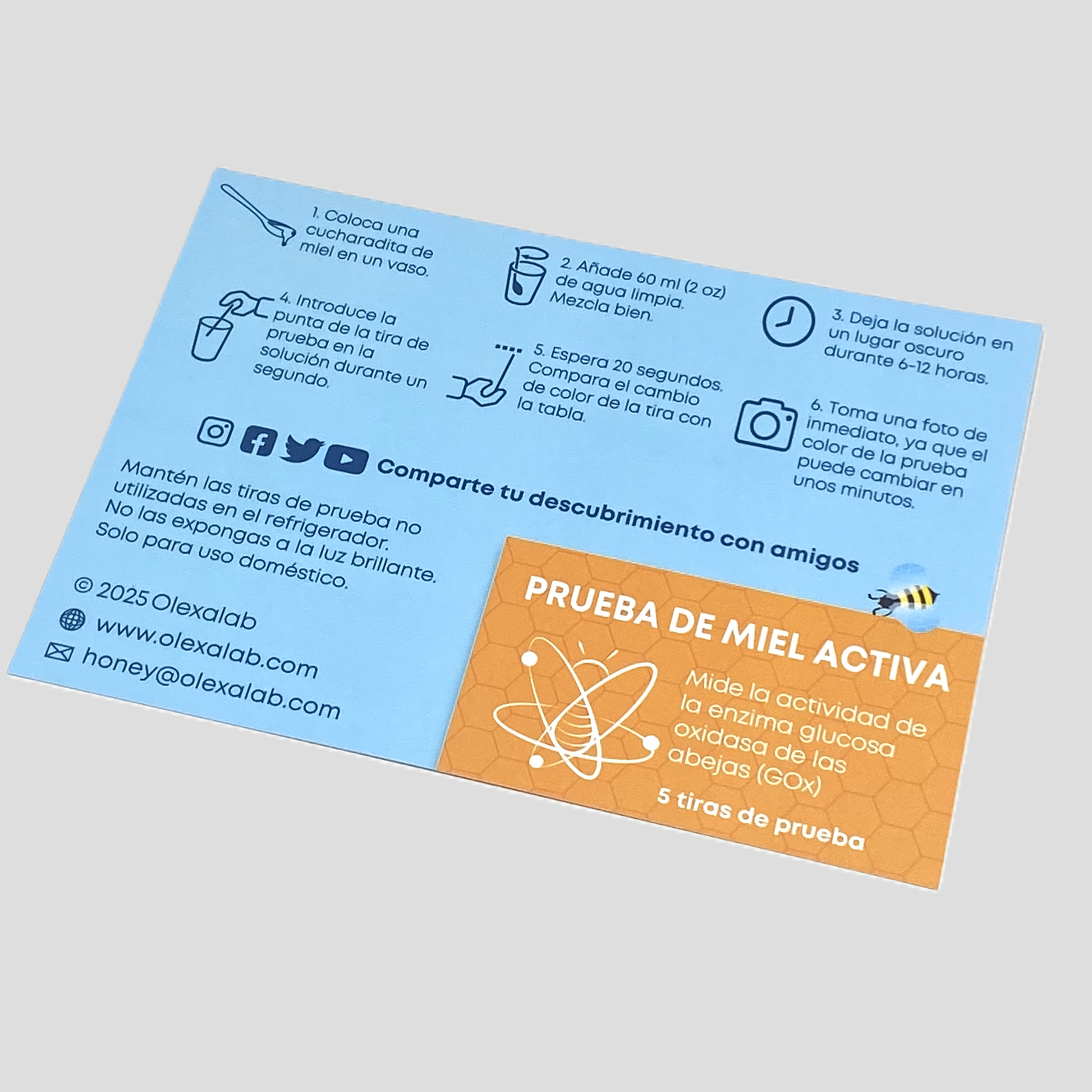
Just honey, water, and a test strip. No equipment. No lab. No guesswork.
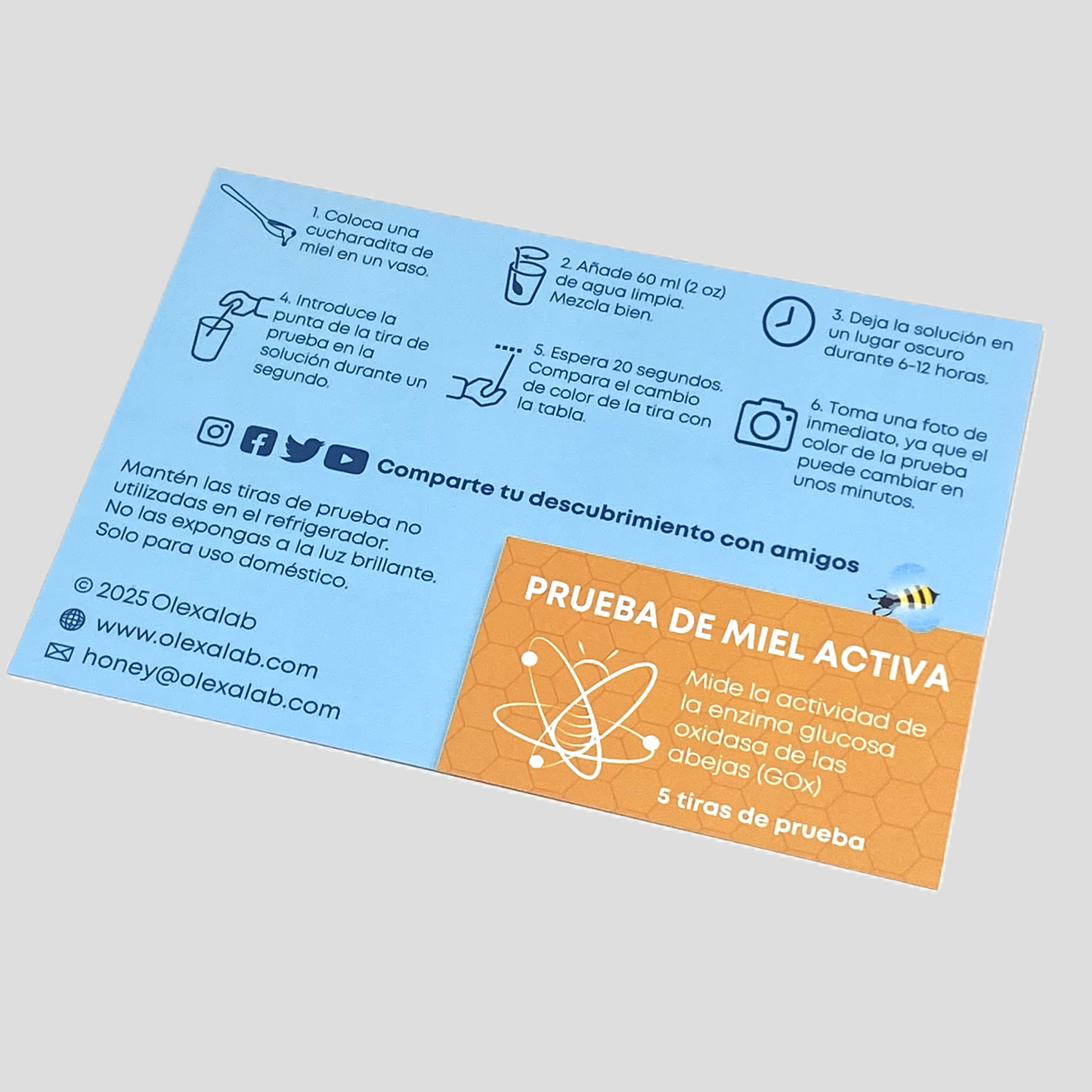
Step-by-step instruction for using the test. For more details, see our full FAQ page.
The test arrives in a standard mail envelope, with no tracking or delivery notification. The reagent on the test strips is light-sensitive. Keep the test away from bright light. Store unused test strips in the refrigerator.
The test is not suitable for certain types of honey, specifically manuka and honeydew honey. It is intended for home use only and does not replace laboratory analysis.
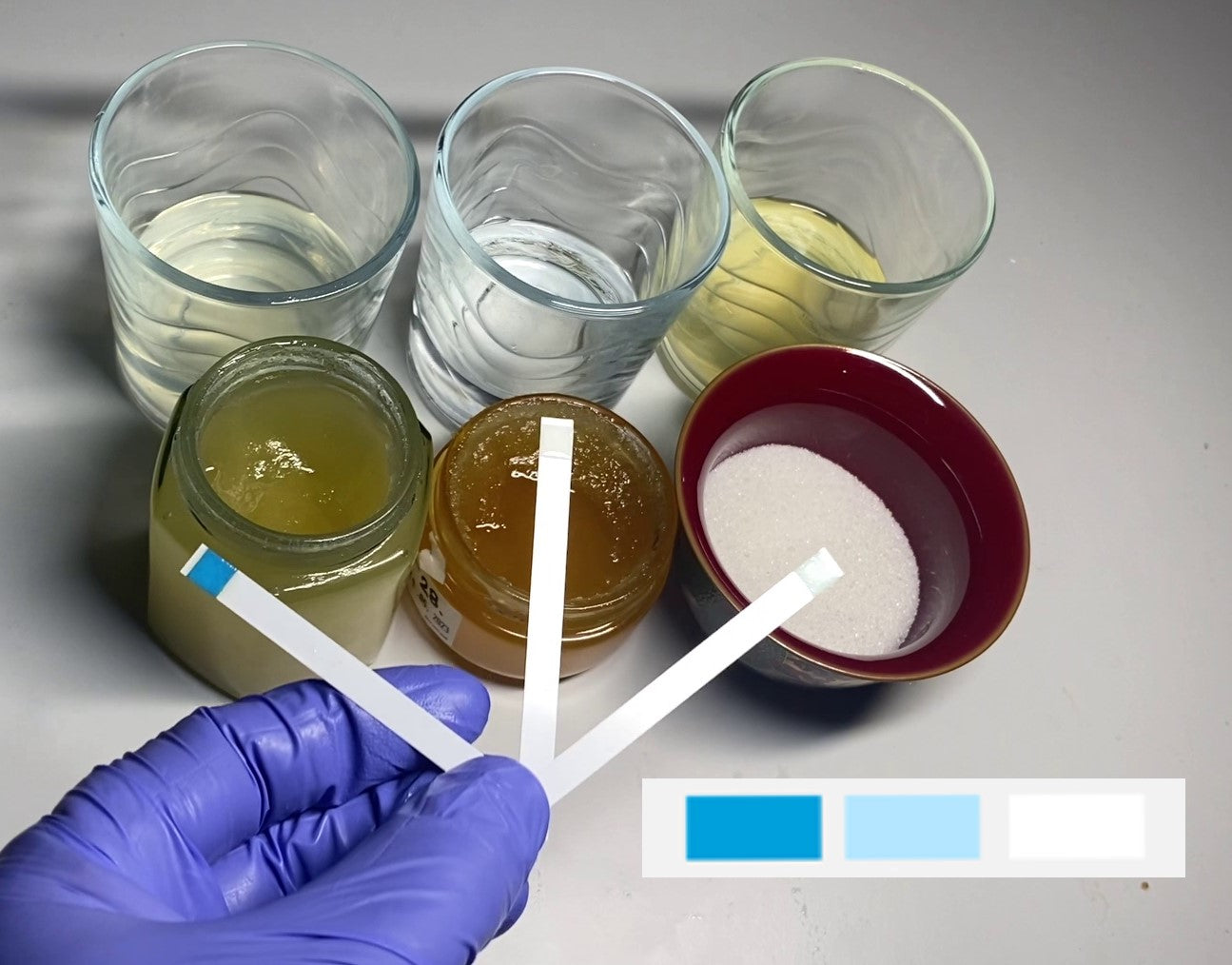
We highly recommend this test. We tested it on raw local honey and got a dark reaction straight away, whereas with commercial honey the reaction took over 15 minutes to develop, and the colour obtained was pale. This likely indicates that the honey was heated to prevent crystallisation, which in turn reduced its beneficial properties.
Excellent service. 100% recommende
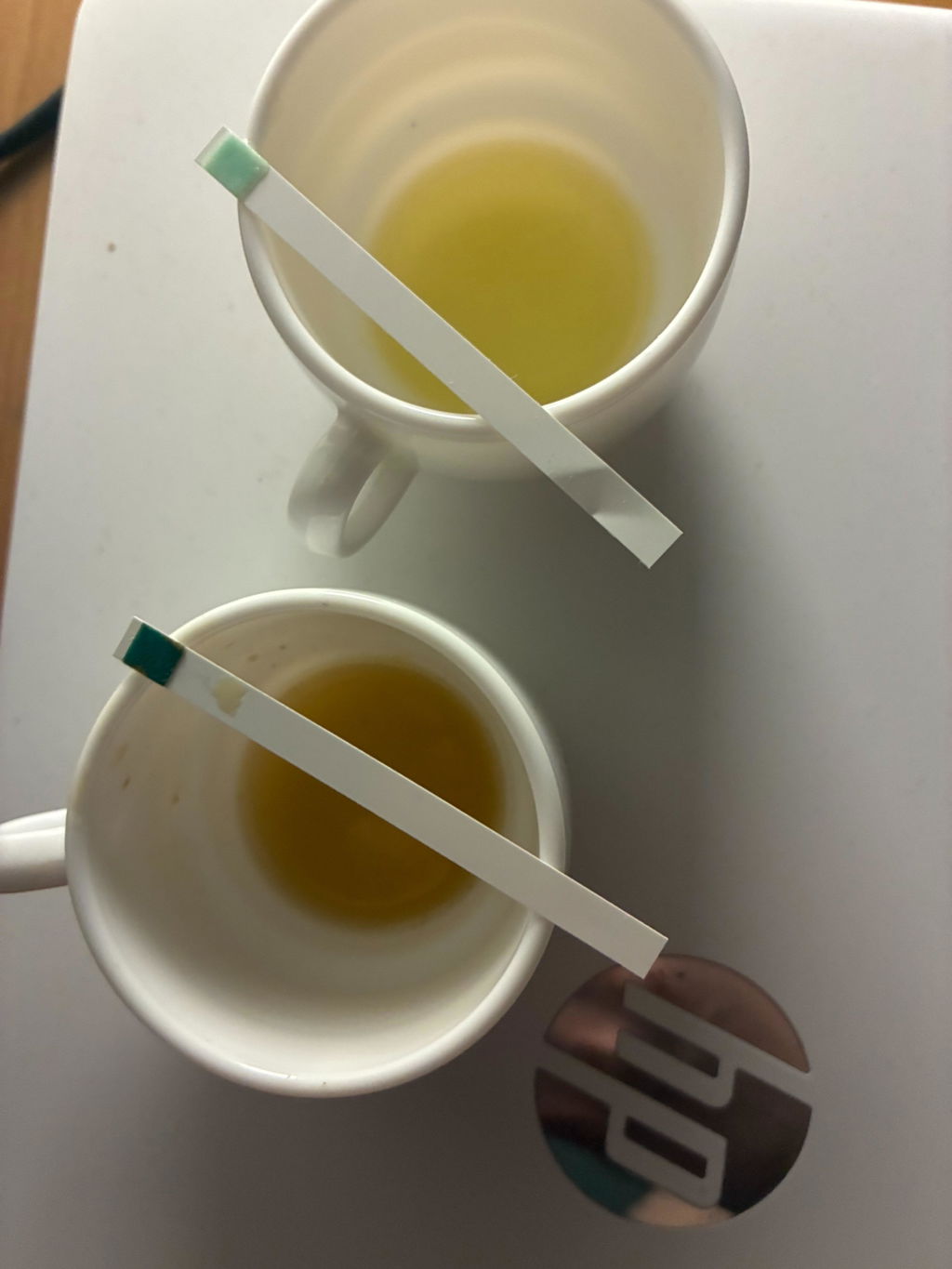
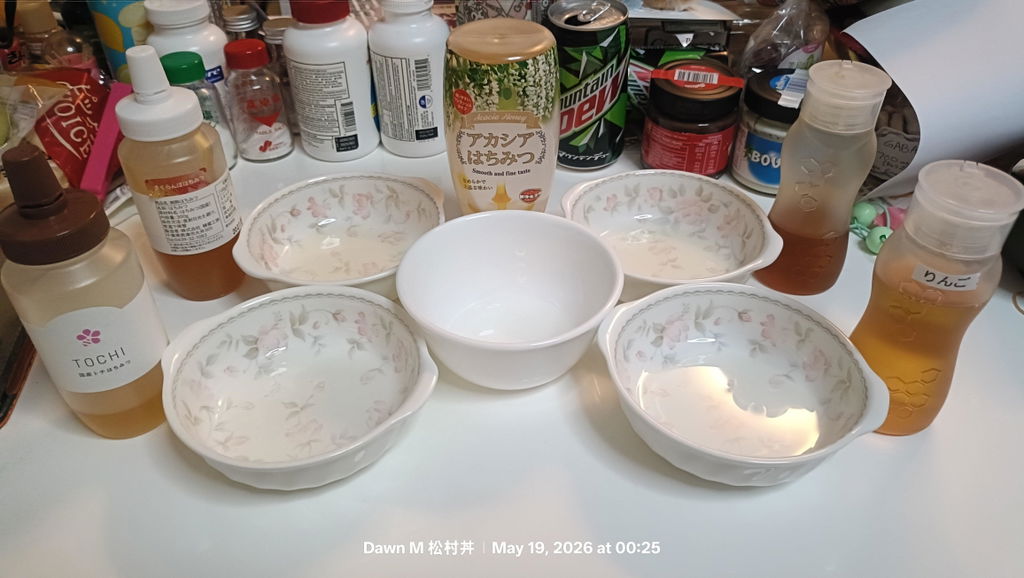
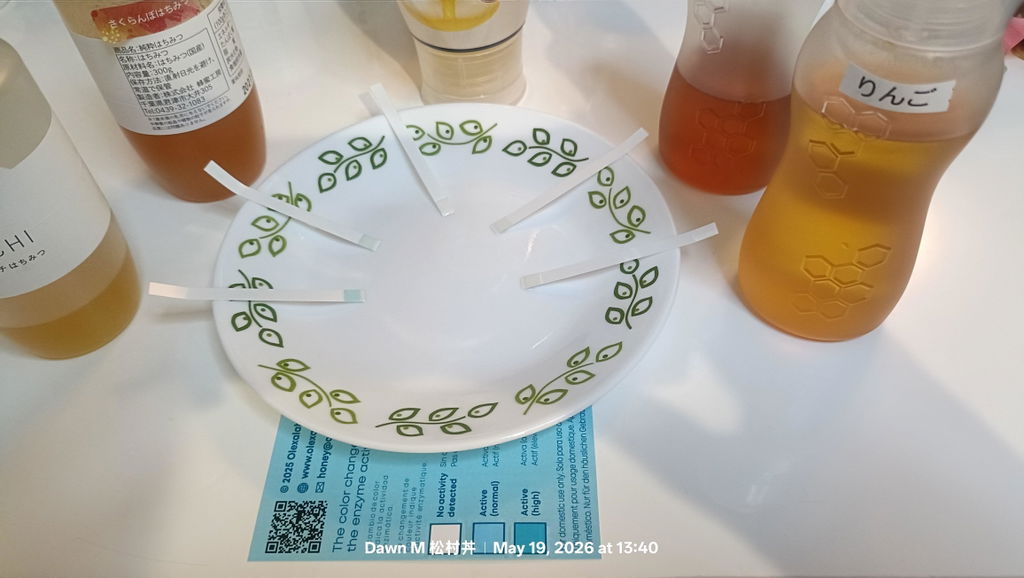
I tested 2 types I bought 3 years ago from a Honey and Mead shop in Chiba-Ken, a Japanese brand I bought at the store on test day, and 2 local (Aichi-Ken) types from the same beekeeper bought within the last 6 months.
The old Chiba honey had an instant reaction. The Tochi (Horse Chestnut) instantly turned blue and the Sakura had a slight color. 30 minutes later only the commercial honey had zero results.
If I was a beekeeper I would video my honey reaction and post online about how quickly / powerful my honey is. And maybe rank batches like honey A reacts slower this year (I wonder why) compared to honey B but last year it was the opposite.
Excellent
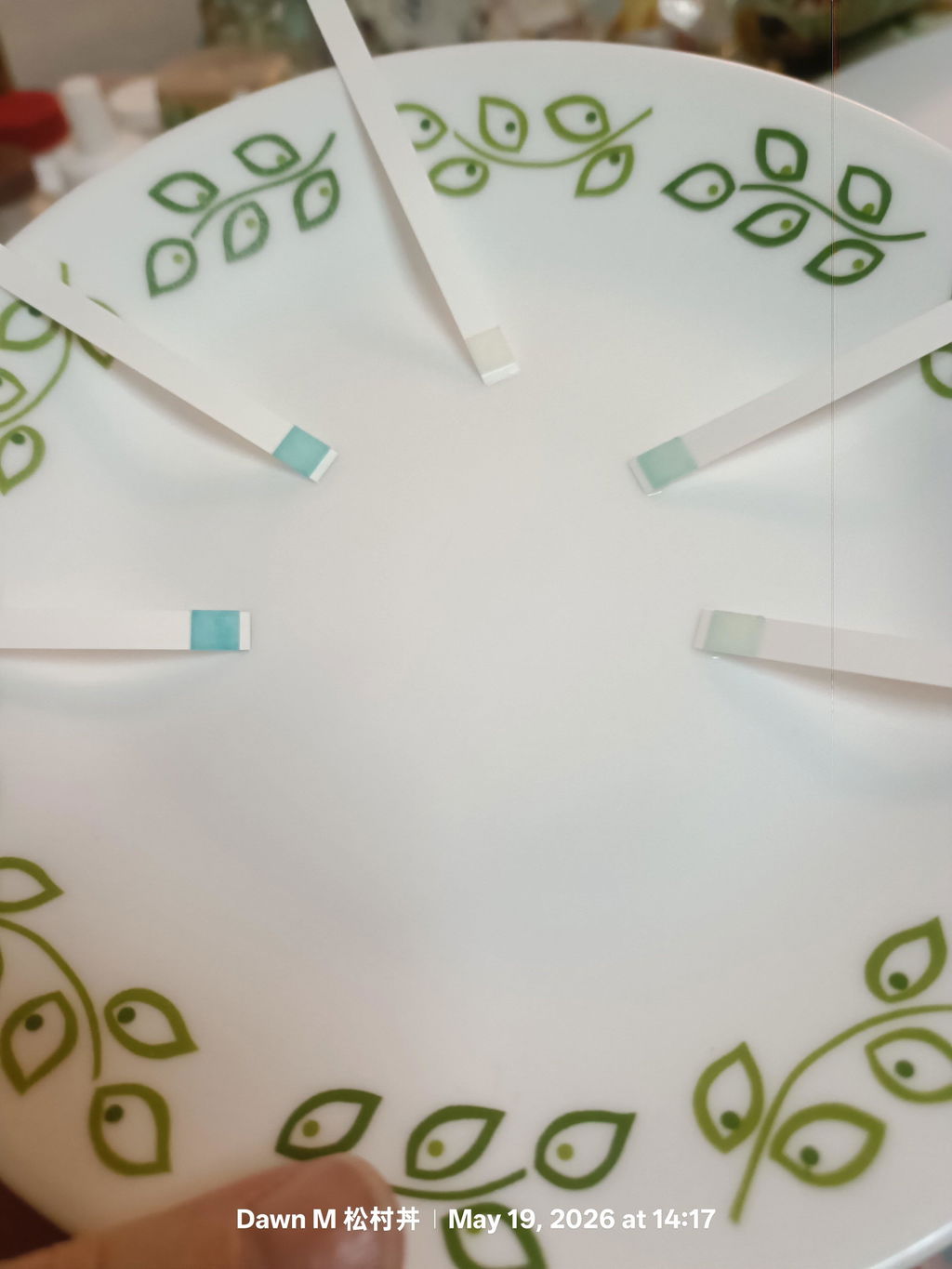
Small-scale beekeeper with less than 10 hives. I personally harvest and bottle my honey. I know I do not heat/pasteurize the product or add any additives, however, this test helps illustrate to the buyer that the glucose oxidase enzymes are active. My buyers can purchase with confidence that they are receiving 100% pure, raw unadulterated honey due to this test.
On a side note, I tested my local big-box store's "best" honey and it was inactive.